How Three Major Trends Will Reshape Malaysia’s Economic Ecosystem in 2026
With the successful conclusion of strategic partnerships between Malaysia’s national payment network (PayNet) and several international payment institutions, the Malaysian payment market has already demonstrated clear signals of transformation in the second half of 2025. In 2026, this transformation will deepen further, forming three major trends centered around cross-border payment interconnection, the popularization of digital banking, and the exploration of asset tokenization.

Trend 1: Cross-border payment interconnection is moving from “bilateral connection” to “multilateral networking”
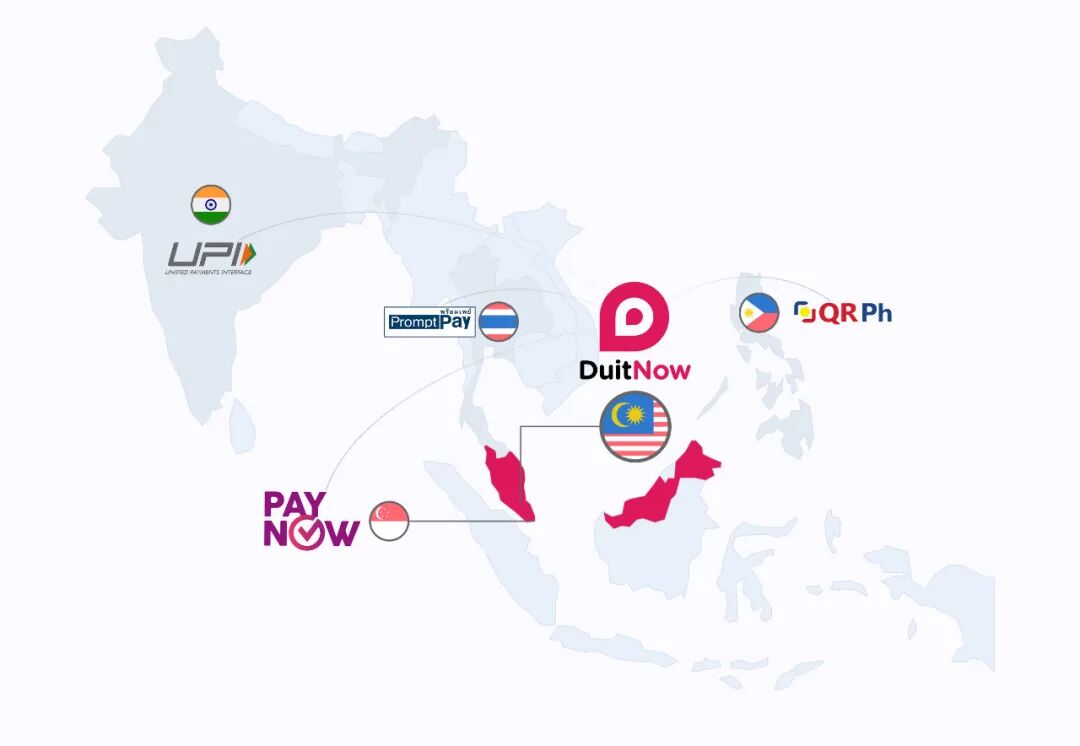
The Project Nexus project, in which the Malaysian National Bank is involved, will enter its critical implementation phase in 2026. This project is not merely a simple bilateral technical connection; instead, it aims to establish a standardized connection network for a multi-country instant payment system (IPS). This means that the DuitNow system in Malaysia will be directly interconnected with PayNow in Singapore, PromptPay in Thailand, the system in the Philippines, and UPI in India through a unified gateway.
Impact on the macroeconomy and business environment:
1.Improving the efficiency of international trade and capital flows: The time for cross-border payments is expected to be reduced from several days to within 60 seconds, which will significantly lower the capital turnover costs for enterprises, accelerate trade and investment activities within the ASEAN region, and enhance Malaysia’s attractiveness as a regional business hub.
2.Reducing the systemic costs of economic activities: The transparency and reduction of payment costs will ultimately benefit a wide range of importers and exporters, cross-border workers, and international students, and reduce cross-border transaction frictions in the economy.
Trend 2: Digital banks have moved from the “customer acquisition stage” to the “ecosystem construction stage”
With the full operation of digital banks such as Boost Bank, the competition among digital banks in Malaysia in 2026 will shift from initial customer acquisition to scenario embedding and ecosystem integration. The core advantage of digital banks is not merely online account opening, but rather the reconstruction of credit models based on transaction data, providing services to small and medium-sized enterprises and unbanked individuals that are not covered by traditional banks.
Impact on the financial system and the social economy:

Trend Three: Asset Tokenization Moves from “Regulatory Sandbox” to “Limited Scenario Pilot”
The Asset Tokenization Roadmap of the Central Bank of Malaysia, announced in November 2025, will enter the proof-of-concept (PoC) and pilot phases in 2026. This exploration is not aimed at virtual currencies, but focuses on the tokenization of real-world assets (RWA), such as supply chain accounts receivable, green bonds, trade financing bills, etc.
Impact on the financial market and industrial upgrading:
1.Building the next-generation financial market infrastructure: The essence of exploring asset tokenization is a pioneering investment in the future financial infrastructure. Successful pilot projects will enhance the transparency, liquidity and automation level of Malaysia’s capital market, and consolidate its position as a regional fintech and innovation center.
2.Open up new financing channels and serve national strategic priorities: Promoting tokenization pilot projects in key areas such as green finance, Islamic finance, and supply chain finance can provide more efficient and transparent direct financing tools for sustainable development projects and key national industries.

How PayCools Helps Customers Seize Transformation Opportunities
In 2026, when the payment market in Malaysia moves towards interconnectivity, inclusiveness and innovation, PayCools, leveraging its profound local insights and global experience, is fully prepared to become the most solid bridge for enterprises to expand and deepen their presence in the Malaysian market.
In the field of cross-border payment interconnection, PayCools’ “global connection, local operation” model enables enterprises to seamlessly integrate into multi-party networks. We offer end-to-end cross-border payment solutions, allowing enterprises to participate in regional trade in a compliant and efficient manner, reducing transaction costs and improving capital turnover efficiency.
In terms of the construction of the digital banking ecosystem, PayCools’ merchant service solution can complement digital banks. Through data analysis, we help small and medium-sized enterprises optimize their cash flow management, and assist traditional enterprises in achieving digital payment transformation, seizing the initiative in the wave of inclusive finance.
In the exploration at the forefront of asset tokenization, PayCools has been closely monitoring the evolution of the regulatory framework in Malaysia and the dynamics of market pilots. It is committed to extending our core capabilities in traditional cross-border payments and local compliance services to this emerging field.

Our core values:
Comprehensive compliance and local integration: Obtained the necessary payment business licenses in Malaysia, established a compliance team composed of local financial and legal experts, ensuring that every step of your business expansion is compliant and sound.
One-stop cross-border and local solutions: PayCools offers an integrated solution covering efficient cross-border remittance and payment, multi-currency processing, as well as local merchant acquiring and distribution.
PayCools is looking forward to working with you to jointly unlock the vast growth potential of Malaysia and ASEAN.